
Americana Studios District: Beyond the Soundstage
October 2026 · 4-page press release
View / Download PDFHollywood coming to Pitman is a pretty big headline. But the proposed $450 million movie studio development is only part of what could eventually take shape on the former Sony property.
During the October 26 Borough Council meeting, the team behind Americana Studios laid out plans for a project that includes not just soundstages, but housing, restaurants, a hotel, and public spaces. They even discussed a possible walking path connecting the development to downtown Pitman.
The presentation was led by Greg Filipek of Sora Development, joined by Lou Fusaro, a television producer whose credits include Ray Donovan, Californication, and House of Lies, and Mark F. Roling, a former Warner Bros. vice president of film studio operations whose work included productions such as Batman, Friends, and ER.
For approximately 40 minutes, the team walked council members and attendees through their vision for the 76.61-acre property.
There's still a long way to go before construction begins, and many details remain unfinalized. But the presentation gave residents a much clearer picture of the developers' vision.
Americana Studios — A New Chapter
October 2026 · 56-page presentation
View / Download PDFHere's what we learned.
Saying Goodbye to the Old Sony Buildings
The nearly half-million square feet of manufacturing buildings currently occupying the property probably won't be part of its future.
According to the developers, the long-term plan is to demolish the existing 495,166-square-foot complex and replace it with new construction.
There was some discussion of temporarily keeping a small portion of the old facility to serve as an early soundstage. Ultimately, though, the plan calls for an entirely new studio campus.
What Would the Movie Studios Actually Include?
The plans call for six primary soundstages, each about 32,000 square feet, plus an 18,000-square-foot virtual soundstage and a separate 9,000-square-foot process stage.
Surrounding those stages would be the facilities needed to keep film and television productions running: workshops for constructing sets, wardrobe and prop departments, production offices, equipment storage, and space for crews.
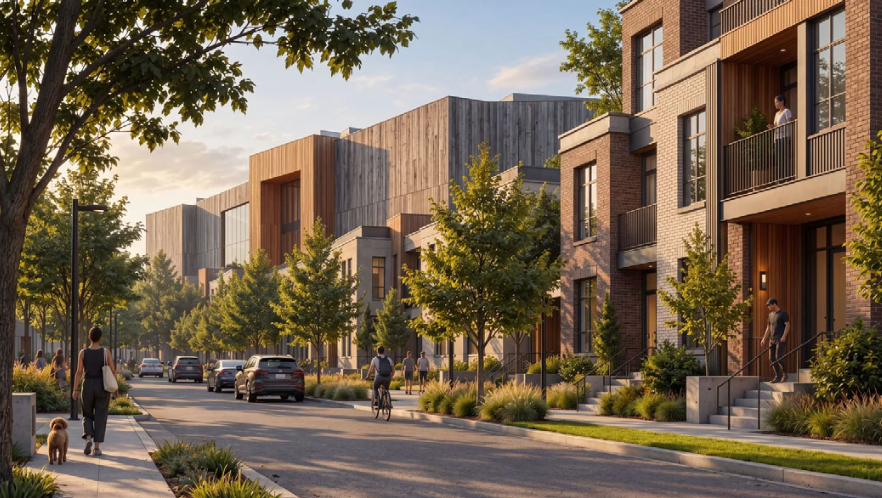
Potential condominium housing as rendered by Sora Development
The virtual soundstage is particularly interesting. Using large LED screens, filmmakers can create realistic digital environments around actors. A scene that appears to take place in a mountain range or a distant city could actually be filmed entirely inside the studio.
But the developers don't want the new buildings to look like the industrial complex they're replacing.
Larry DiVietro of Glassboro-based LDE spoke about choosing exterior materials that would age well, rather than creating another collection of plain warehouse-style buildings.
“We're trying to make choices of finishes on the outsides of the building that are gonna weather with time, look beautiful,” DiVietro explained.
Why South Jersey?
With major film studio projects already underway in North Jersey, the developers see an opportunity to bring that same industry farther south.
New Jersey's film-production tax incentives are a big part of the appeal. During the presentation, the team cited Netflix and Lionsgate projects in North Jersey as examples of the industry's growing presence in the state.
South Jersey also offers what filmmakers always look for: a wide variety of locations.
Beaches, farmland, forests, small towns, and nearby cities are all within a relatively short drive. A production could film scenes in dramatically different settings without moving its entire operation across the country.
“Why not South Jersey?” Filipek asked.
And why Pitman? The former Sony site offered a large property with existing infrastructure, access to regional highways, and enough space for the mixed-use development the team envisioned.
A New Neighborhood Along Woodbury-Glassboro Road
The studios may be the centerpiece, but a substantial portion of the project would look more like a new neighborhood.
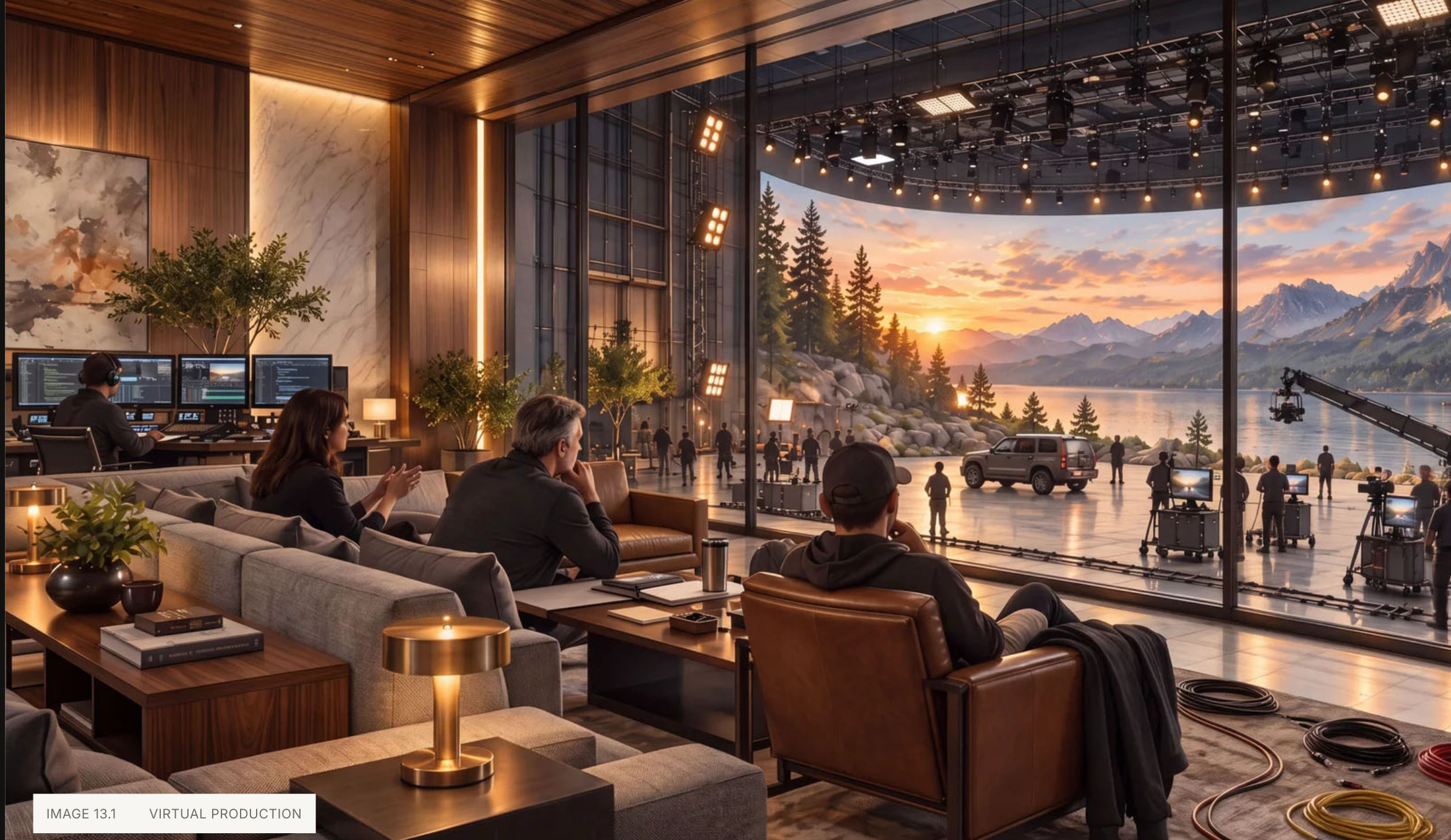
Digital background sound stage as rendered by Sora Development
Plans include single-family homes, townhouses, apartments, and condominiums. The developers also discussed workforce housing for people employed on film and television projects.
Some buildings would combine several uses, with shops on the ground floor, offices above, and residential units on the upper floors. The proposal also includes restaurants, additional office space, and an extended-stay hotel.
A landscaped entrance road, tentatively called Americana Boulevard, would lead into the development.
The renderings show a walkable district with trees, outdoor seating, and places to gather. Buildings would vary in height, with some reaching three or four stories, rather than having an identical appearance throughout.
One detail we don't have yet is how many homes would actually be built. The presentation also didn't provide proposed prices or estimates of how many new residents could eventually live there.
A Movie Studio That Residents Can Visit
Most working movie studios aren't places where the general public can simply walk in. Americana's developers want at least part of their campus to be different.
One example is the studio commissary, the dining facility where production crews would eat.
The proposed design includes separate entrances for studio employees and the public. Residents could potentially stop in for lunch or attend an event while active production areas remain secured.
“We’re not gonna duplicate that when we have the Broadway theater downtown””
The developers also floated ideas for public movie screenings, outdoor entertainment, studio tours, and opportunities to see some of the filmmaking process firsthand.
They even discussed holding premieres for films produced at Americana Studios.
The renderings include landscaped courtyards, water features, gathering areas, and pedestrian walkways.
These are still proposed features, but they offer a glimpse of how the developers hope to make the property somewhere residents might actually spend time, even if they have nothing to do with the film industry.
What About Downtown Pitman?
One question that naturally comes with a development of this size is what it might mean for the businesses already downtown.
Mayor Michael Razze addressed that concern in an October 27 statement, saying that “any redevelopment of this property must complement, not compete with, the unique character that makes Pitman special.”
The developers expressed a similar sentiment during their presentation. All four speakers talked about Pitman's downtown, architecture, and small-town atmosphere.
Filipek offered a specific example involving the Broadway Theatre. The development team had originally considered including its own theater in the studio district. But after getting to know Pitman, they reconsidered.
“We're not gonna duplicate that when we have the Broadway theater downtown,” Filipek said.
The team also discussed using locations around town for filming, including Pitman Grove, which impressed members of the group during an earlier visit.
Perhaps the most interesting connection to downtown was a proposed pedestrian walkway following the railroad right-of-way. If it becomes reality, the path could let studio employees, residents, and visitors reach downtown Pitman on foot.
Traffic, Wetlands, and Environmental Considerations
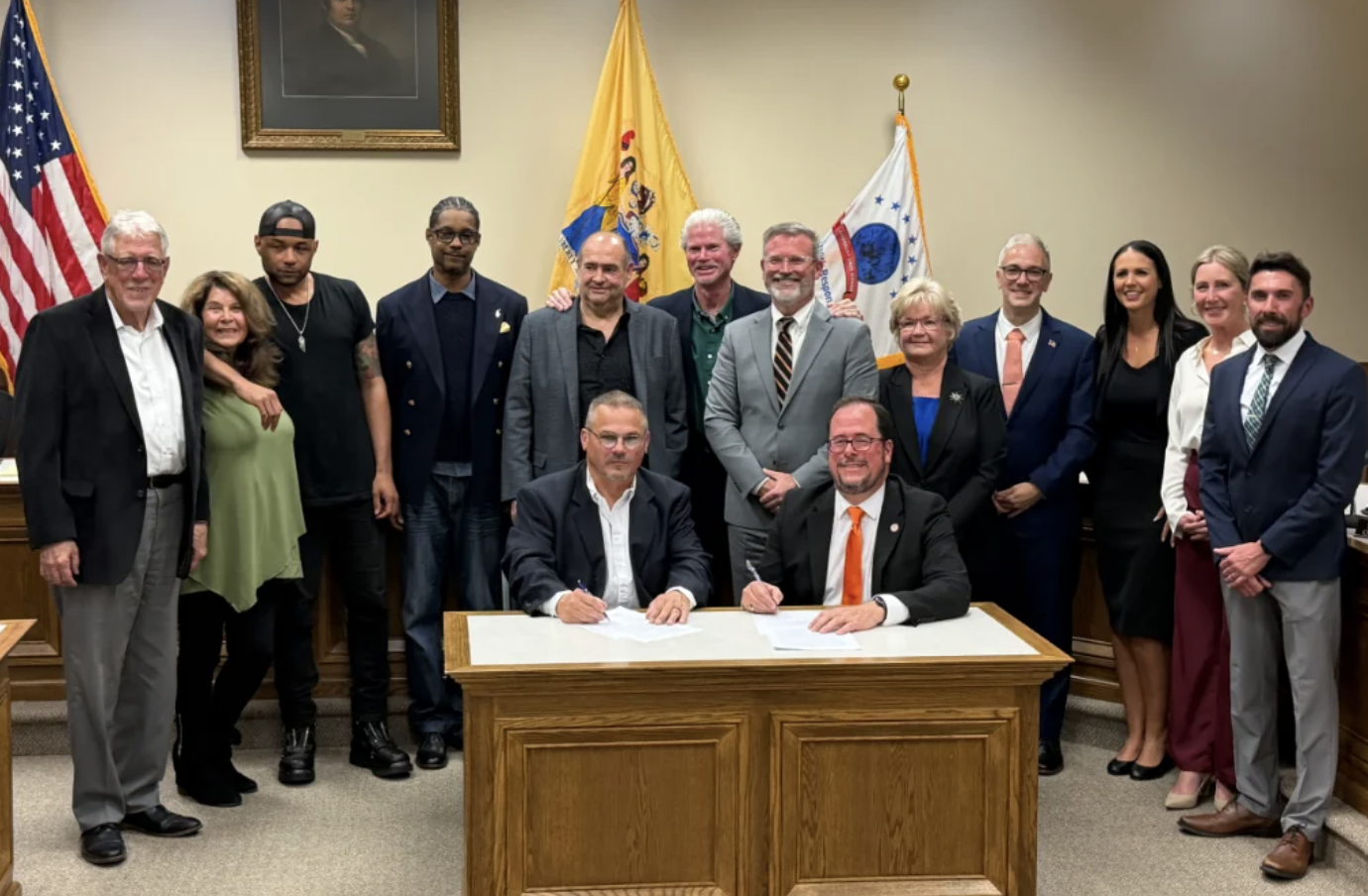
Council and Americana Studios Team Surround Mayor Michael Razze and Greg Filipek Signing Resolution 181
A project with film studios, housing, restaurants, and a hotel would bring several different types of traffic to the area. The developers acknowledged that traffic studies will be necessary. They discussed possible improvements along Lambs Road, including an additional traffic signal.
The preliminary plans show multiple entrances intended to separate regular residential and commercial traffic from the trucks and equipment vehicles serving film productions.
The property contains wetlands toward the rear of the site. The developers said they intend to work around those areas, preserve natural features, and possibly incorporate trails and additional landscaping. Detailed traffic projections and environmental remediation plans were not part of the presentation.
Jobs and Tax Revenue
The developers estimated that construction could support more than 400 jobs at its peak. Their written presentation projects 250 to 530 jobs supported annually, including direct and indirect employment, and $12 million to more than $30 million in annual economic activity across South Jersey.
For Pitman, one of the more significant numbers was the projected $400,000 to $1.2 million in annual property-tax revenue for the borough once the development is completed. That's still an estimate, and the effect of any potential tax incentives has not been established.
The financial importance of the Sony property isn't new. In its 2024 financial report, the Pitman School District acknowledged the impact of Sony's departure:
“The 2011 closing of the former Sony DADC plant (largest taxpayer) has impacted the tax rate for Pitman residents.”
The district also identified redevelopment as a way to ease the tax burden on residents.
Opportunities for Pitman Students
The development team spent a surprising amount of time talking about something other than movies or buildings: opportunities for young people.
They discussed potential partnerships with Rowan University's Department of Radio, Television & Film and local high schools. Ideas included internships, mentorship programs, technical training, and opportunities for students to see how a working production operates.
Fusaro, who said he started in the industry as a production assistant at 19, stressed the importance of learning from people already doing the work. Opportunities wouldn't be limited to aspiring actors or directors. Film productions need carpenters, electricians, painters, costume specialists, technicians, and plenty of other skilled workers.
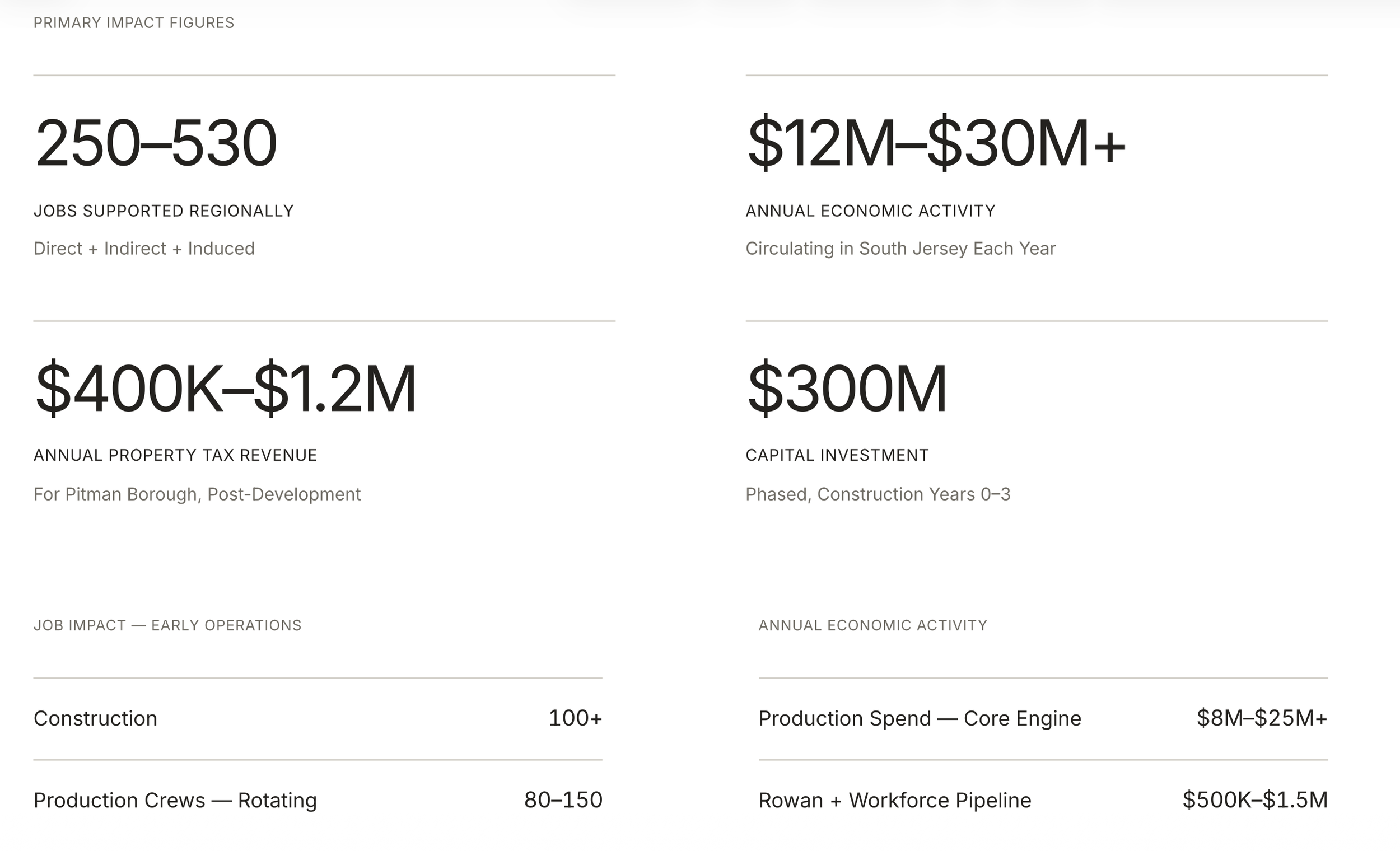
Economic Impact Figures as Presented by the Americana Studios Development Team
Roling also has experience in film education, having co-founded Creative Wisconsin Filmmakers, an organization focused on hands-on filmmaking opportunities.
What Happens Next?
After the presentation, Borough Council unanimously approved Resolution No. 181, conditionally designating a redeveloper and authorizing a memorandum of understanding. It's an important step for a property that has been the subject of redevelopment discussions for more than a decade, but it isn't the final approval for the project. The development still faces planning, engineering, environmental, and other reviews before construction can begin.
No definite construction start date was announced.
An Ambitious Vision, With Plenty Still to Be Decided
For a property that has sat largely unused since Sony's departure, the Americana Studios proposal represents a potentially dramatic change. The plans go well beyond movie production, with housing, businesses, public spaces, and transportation connections that could affect more than just the former manufacturing site.
Plenty of questions remain, especially about traffic, the number of homes, environmental work, financing, and how the project will ultimately affect borough taxpayers. For now, residents have an idea of what the developers want to build.
Whether all of it makes it from the presentation screen to the former Sony property remains to be seen.
